The Complete Business Application Stack for Bulk Commodity Traders: Mid-Size to Mastodons (2026 Edition)
Key Takeaways
- Five layers: CTRM, ERP, operations, BI, AI — integrate before you innovate.
- Mid-size traders: fix fragmentation first; digitize freight procurement for fastest ROI.
- Mastodons: decouple data lifecycle from deal lifecycle; protect the core, liberate the edge.
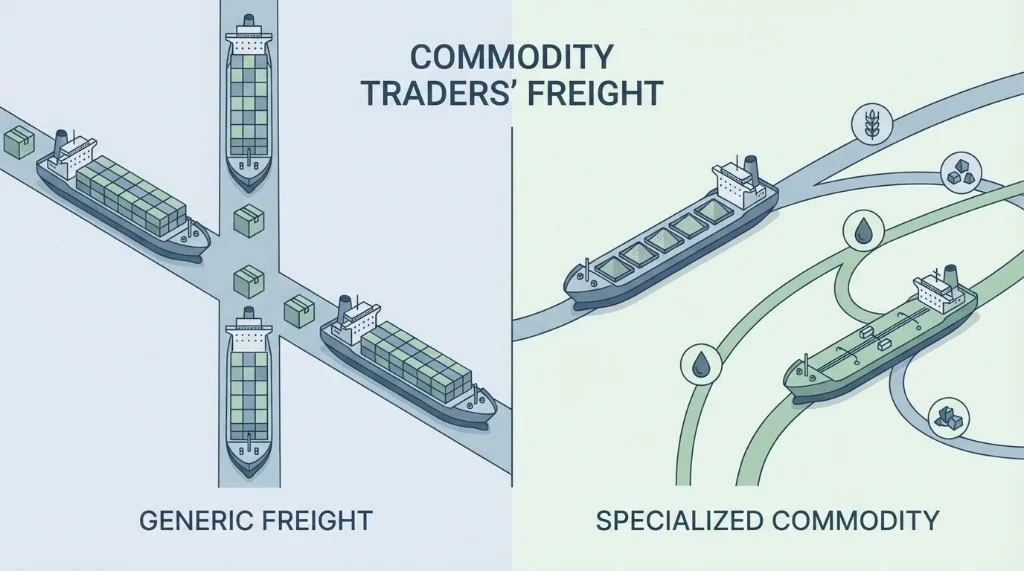
- CTRM is not your ERP, warehouse, or freight system — specialization wins.
- AI ROI starts with document extraction, demurrage analytics, and structured freight data — not autonomous trading.
A practitioner’s guide to IT architecture, process automation, vendor selection, and AI integration for physical bulk commodity trading companies.
Who this is for: COOs, CFOs, and Heads of Operations at bulk commodity trading firms doing $500M to $10B+ in annual volume. Whether you trade coal, grains, fertilizers, metals, or chemicals — this guide covers the full technology stack you need to compete in 2026 and beyond.
1. Why Your IT Setup Either Makes or Costs You Millions
Here is a number that should get your attention.
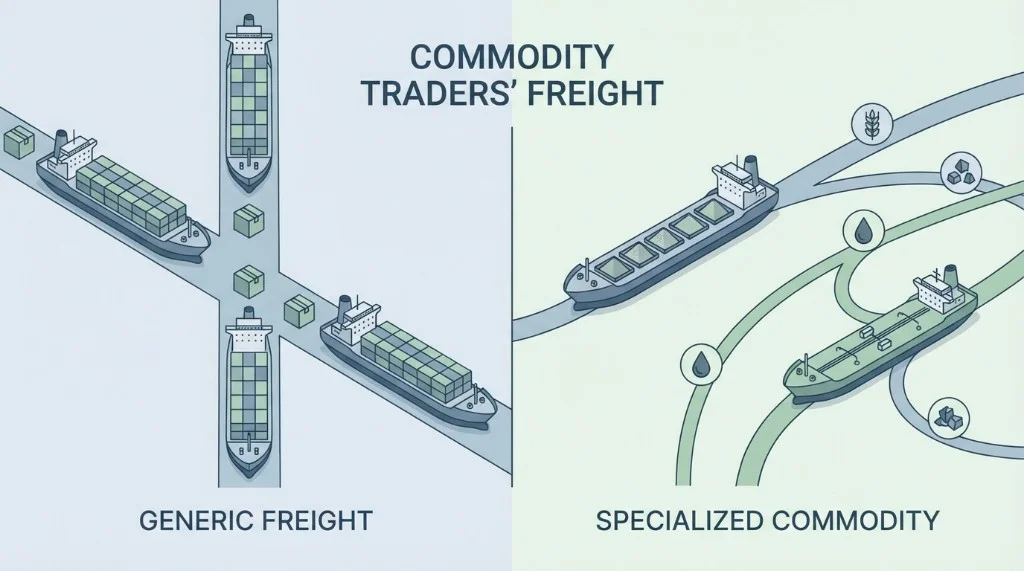
Commodity trading firms that have digitized their core workflows report 15–25% reductions in demurrage costs and 40–60% reductions in manual operations headcount within 18 months of deployment. Freepoint Energy, a U.S.-based physical commodities trader, used AI document analysis to uncover systemic demurrage overcharges at a major oil handling facility — charges that had been invisible for years because no one had the data infrastructure to spot the pattern. The refunds alone justified the investment. The permanently reduced costs justified it many times over.
Vitol, one of the world’s largest energy and commodity trading companies, used AI-driven operations data to move members of its settlements team off routine processing tasks entirely — redirecting them to natural gas actualization work that actually generates value. The same data infrastructure that automated their settlements gave them pricing accuracy they had never had before.
StoneX used AI to transform supplier intelligence in their grain and oilseed business. Before: supplier quality was binary — in grade or out of grade. After: AI captured granular quality data across thousands of deliveries, allowing merchandisers to identify which suppliers consistently delivered above grade and route more business to them. The same system calculated total acreage under production for each supplier, letting customer representatives calculate what percentage of harvest they were capturing and target the gaps.
These are not edge cases. They are the new baseline for firms that want to compete.
Yet most mid-size bulk traders in 2026 still run on a patchwork of Excel, email chains, a legacy CTRM system that nobody fully understands, and a finance team that reconciles everything manually at month-end. The mastodons — Vitol, Trafigura, Gunvor-tier firms — solved this a decade ago. The gap between them and the mid-tier is not narrowing. It is widening, and it is widening fast.
This guide is the complete playbook for closing that gap. It covers every layer of the technology stack, every business process that should be automated, every vendor worth evaluating, and every place where AI is delivering real returns versus where it is still mostly hype.
2. The Two Tiers: Mid-Size vs. Mastodon
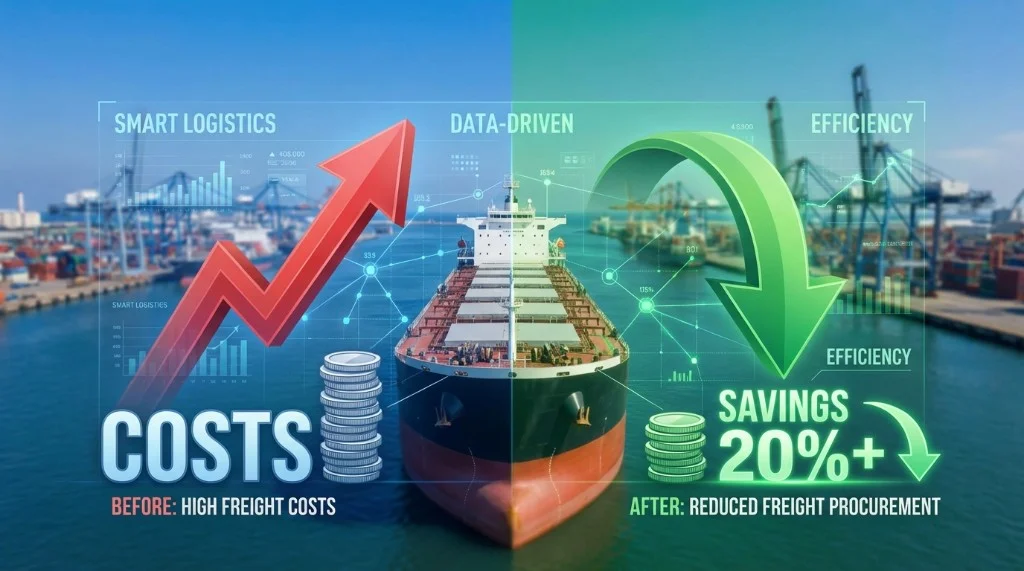
Before diving into the stack, it is worth being precise about what these two tiers actually mean in terms of IT requirements — because the delta is significant and the solutions are materially different.
The Mid-Size Trader (Annual Volume: $500M – $3B)
Profile:
├── 20-100 traders and operations staff
├── 2-4 offices, typically 1-2 primary hubs
├── 1-4 commodity classes (e.g., coal + freight, grains + oilseeds)
├── Physical and paper positions, limited derivatives complexity
├── Small IT team (2-8 people) or outsourced
└── Budget sensitivity: ROI required within 12-18 months
The core IT problem at this tier is fragmentation. You have a CTRM that handles trade capture, a separate ERP or accounting system, freight managed via email and spreadsheets, and reporting built in Excel by someone who left two years ago. Data lives in silos. Reconciliation is manual. Risk visibility is 24 hours stale at best.
The priority at this tier is consolidation and integration — not transformation. You need your existing processes to work reliably before you can automate them. The firms that try to leapfrog to AI without fixing the data plumbing first consistently fail and waste budget.
The ROI opportunity at this tier is enormous precisely because the baseline is so low. Replacing email-based freight procurement with structured digital tendering alone — on a firm doing $500M in annual volume with 20–30% freight cost — can generate $3M–$8M in annual savings. That is not a technology project. That is a business transformation.
The Mastodon (Annual Volume: $3B+)
Profile:
├── 200-2,000+ trading and operations staff
├── Global hubs across multiple continents
├── Multi-commodity, multi-currency, multi-entity complexity
├── Sophisticated derivatives, structured deals, complex pricing formulas
├── Dedicated IT departments (50-200+ people)
└── Regulatory requirements: MiFID II, REMIT, CFTC, EMIR
At this scale, the IT challenge shifts fundamentally. The fragmentation problem has usually been solved — or at least addressed. The new problem is what Baringa Partners calls the data paradox: data is recognized as a profit engine, yet legacy monolithic ETRM systems were built as accounting tools, not decision engines. They manage the trade lifecycle after it happens. But competitive advantage in 2026 is generated upstream — in pre-trade analytics, intraday optimization, and real-time risk — areas where traditional CTRM systems are structurally blind.
The priority at this tier is decoupling the data lifecycle from the deal lifecycle — building an AI-ready data layer that sits alongside (not inside) the core ETRM, enabling the speed and experimentation that commercial teams need without compromising the stability and control that settlements and compliance require.
As one senior executive at a major trading house put it: “We need to move away from a default position where an armed guard is protecting a whiteboard.” The core needs protection. The edge needs freedom to experiment.
3. The Five-Layer Application Stack
Think of the ideal IT setup as five distinct layers. Each layer has a specific job. The mistake most firms make is either collapsing layers into one monolithic system — or leaving gaps between layers that get filled with spreadsheets.
+--------------------------------------------------------------+
|  LAYER 5: INTELLIGENCE & AI                                  |
|  Market intelligence, predictive analytics, AI agents        |
+--------------------------------------------------------------+
|  LAYER 4: REPORTING & BI                                    |
|  P&L dashboards, risk reporting, management analytics         |
+--------------------------------------------------------------+
|  LAYER 3: OPERATIONS & LOGISTICS                             |
|  Freight procurement, vessel tracking, document management   |
+--------------------------------------------------------------+
|  LAYER 2: FINANCE & COMPLIANCE                               |
|  ERP, treasury, hedge accounting, regulatory reporting       |
+--------------------------------------------------------------+
|  LAYER 1: CORE TRADING (CTRM)                                 |
|  Trade capture, position management, risk, settlement          |
+--------------------------------------------------------------+
Each layer feeds data upward and receives instructions downward. The integration between layers is as important as the layers themselves — and it is where most implementations fail.
4. Layer 1: Core Trading — The CTRM

The CTRM (Commodity Trading and Risk Management system) is the spine of your operation. Every trade, every position, every risk exposure flows through it. Getting this wrong is expensive — CTRM implementations routinely run 18–36 months and cost $2M–$15M+ for mid-to-large firms. Getting it right is the foundation everything else is built on. For a concise vendor comparison and how to select a CTRM for your tier, jump to the assessment table below.
What a CTRM Must Do for a Bulk Trader
A properly deployed CTRM should handle all of the following without manual workarounds:
- Deal capture for physical and financial instruments across all commodity classes
- Position management in real time (or near-real-time) with full audit trail
- Mark-to-market valuation and P&L attribution by trader, desk, and entity
- Exposure and risk reporting — price risk, volume risk, counterparty risk, FX risk
- Scheduling and nomination management — vessel nominations, loading schedules, delivery windows
- Settlement and invoicing — automated settlement instructions, invoice generation
- Contract management — pricing formula support, quality spec tracking, delivery conditions
- Counterparty management — credit limits, exposure tracking, KYC documentation
What It Should NOT Be Expected to Do
This distinction is critical because vendors sell their CTRM as an all-in-one solution. It rarely is.
- Do not use your CTRM as your primary logistics or freight management system
- Do not replace your ERP with your CTRM for general ledger and financial reporting
- Do not use your CTRM as your data warehouse or BI platform
- Do not manage your document workflows inside your CTRM
Every firm that has tried to run freight procurement, document management, and financial reporting out of a single CTRM has ended up with a system that does everything poorly, is impossible to upgrade, and costs twice as much to maintain.
CTRM Vendor Comparison: The Honest Assessment
Current G2 ratings and market positioning as of 2026:
| Vendor | G2 Score | Best Fit | Strengths | Weaknesses | Tier |
|---|---|---|---|---|---|
| Openlink (ION) | 8.7/10 | Energy, metals, agri — global | Deepest functionality, derivatives, treasury, physical logistics | Complex, expensive, 18–36 month implementation, ION post-acquisition support concerns | Mastodon |
| Allegro (ION) | 9.6/10 | Multi-asset enterprise | Front-to-back, strong risk engine, best-in-class features score | Monolithic, high TCO, slow to innovate | Mastodon |
| Eka One | 8.7/10 | Agri, metals, energy mid-large | Cloud-native, AI-native, supply chain depth, real-time risk engine | Newer product, less proven at extreme scale | Mid-size to mastodon |
| Triple Point / CXL (ION) | — | Multi-commodity mid-size | Strong for agri/CPG, streamlined deployment, good for physical + financial | Less strong on complex energy derivatives | Mid-size |
| Aspect CTRM | — | Energy/power mid-size | Only true multi-commodity SaaS CTRM, fast deployment | Narrower commodity coverage, less depth on logistics | Mid-size |
| IGNITE CTRM | — | Oil, gas, coal, NGLs | Modern SaaS, quick to deploy, affordable, packaged pricing | Less mature for complex structured deals | Mid-size |
| Molecule | — | Energy, metals, crypto | Modern UI, fast implementation, API-first, good for new firms | Thinner on physical logistics, less bulk-specific | Mid-size |
| Agiboo Agiblocks | — | Soft commodities, agri | Purpose-built for grains/softs, affordable, fast to implement | Limited for energy or metals | Small to mid-size |
| ENTRADE (Enuit) | — | Oil, gas, power | Unified architecture, single database, strong deal structuring | Primarily energy-focused, less relevant for dry bulk | Mid-size |
The honest take on ION Group: ION has acquired most of the major CTRM vendors — Openlink, Allegro, Triple Point, Brady. The product investment and support quality post-acquisition has been mixed across the portfolio. Allegro scores highest on features. Openlink has the deepest functionality for complex multi-asset operations. But if you are evaluating any ION product, ask hard questions about the roadmap, support SLAs, and what the implementation partner ecosystem looks like. The sales process will be excellent. The post-go-live experience has historically been more variable.
For pure bulk commodity traders (coal, grain, fertilizers, dry bulk): Eka One and Triple Point are the most natural fits at mid-size. Eka One’s cloud-native architecture and AI-ready data model give it a structural advantage for firms that want to build an intelligence layer on top. Openlink or Allegro if you have the budget, complexity, and timeline to justify it.
5. Layer 2: Finance and Compliance — The ERP

Your CTRM should not be your general ledger. Full stop. You need an ERP that handles the financial side of the business independently and integrates cleanly with your CTRM.
What the ERP Must Handle
- General ledger and financial reporting (IFRS/GAAP)
- Accounts payable and receivable
- Hedge accounting (IAS 39 / IFRS 9) — this is non-trivial for commodity traders
- Multi-entity, multi-currency consolidation
- Tax management across jurisdictions
- Regulatory reporting (VAT, transfer pricing, country-by-country)
- Treasury and cash management
The Critical Integration Requirement
The single most important integration in your entire technology stack is the CTRM-to-ERP feed. Every trade settlement, every invoice, every mark-to-market entry should flow automatically. If your operations team is re-keying data between systems, you do not have an integration problem. You have a control failure, a data quality problem, and a compliance risk — all at the same time.
The standard approach: API-based real-time sync for settlements and invoices; daily batch for mark-to-market entries. Never allow manual re-keying between these two systems under any circumstances.
ERP Options for Commodity Traders
| Vendor | Best For | Key Notes |
|---|---|---|
| SAP S/4HANA | Mastodon-tier, global operations | Industry standard at enterprise level. Deep commodity-specific modules (SAP Commodity Management). High cost ($5M–$50M+ implementation), long timeline. The right answer if you are growing toward mastodon scale. |
| Microsoft Dynamics 365 | Mid-size to large | Strong mid-market option. DycoTrade builds a commodity-specific layer on top that handles CTRM-adjacent functions. More affordable, 6–18 month implementation. Best value for most mid-size traders. |
| Oracle Fusion Cloud | Enterprise, complex multi-entity | Strong financial reporting and consolidation. Used by several large trading houses. Implementation complexity similar to SAP. |
| Infor CloudSuite | Firms with processing/manufacturing | Good for companies with physical assets alongside trading. Less common in pure-play trading. |
For most mid-size bulk traders, Dynamics 365 with DycoTrade delivers the best balance of functionality, speed, and cost. SAP becomes the right answer when you cross approximately $3B in volume and need the ecosystem depth for global multi-entity operations.
6. Layer 3: Operations and Logistics — The Most Underinvested Layer

This is where mid-size traders bleed money. Not in their CTRM. Not in their ERP. In the operations layer — the unglamorous, unsexy, critically important layer that sits between deal execution and financial settlement.
The operations layer covers:
- Freight procurement — tendering, rate negotiation, fixture management, voyage orders
- Vessel and cargo tracking — ETA monitoring, port calls, laycan management, NOR tracking
- Document management — bills of lading, letters of credit, inspection certificates, quality certificates, customs declarations
- Demurrage management — laytime calculations, statement of facts, claims, dispute resolution
- Counterparty and contract management — terms, delivery conditions, quality specs, pricing formulas
The State of Operations at Most Mid-Size Traders
CURRENT STATE (most mid-size firms):

Freight Procurement:
  Email to 5-10 brokers → Responses in different formats
  → Manual spreadsheet comparison → Award via email
  → No audit trail, no structured data, no analytics

Document Management:
  Documents received via email → Saved to shared drive
  → Manual review → Manual data entry to CTRM/ERP
  → Discrepancies found at settlement (too late)

Demurrage:
  Vessel arrives → Operations team manually calculates laytime
  → Claim submitted weeks later → Disputed → Negotiated
  → No pattern analysis, no predictive capability
This is not a people problem. The operations teams at these firms are skilled and hardworking. It is a structural problem — the absence of systems that capture, structure, and analyze operational data in real time.
The Business Case for Digitizing Operations
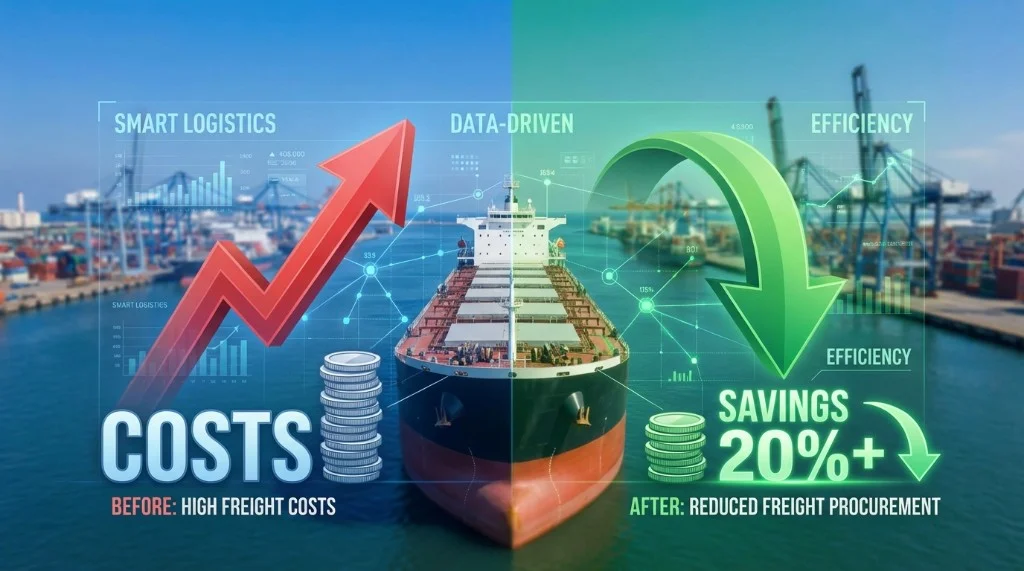
Freight typically represents 15–40% of the total cost of a bulk commodity trade. On $500M in annual volume with 25% average freight cost, that is $125M in annual freight spend. A 3% improvement in freight rates through structured, competitive tendering is $3.75M in annual savings. The cost of the software to achieve this is a rounding error by comparison.
Demurrage typically runs 0.5–2% of cargo value for firms without structured demurrage management. On $500M in annual trading volume, that is $2.5M–$10M per year. AI-driven demurrage analytics can identify and recover 20–40% of avoidable demurrage. That is another $500K–$4M annually from a single tool.
These numbers are why the operations layer — not the CTRM — is where most mid-size traders should focus their first technology investment dollar.
Key Tools for the Operations Layer
Freight Procurement and Digital Tendering:
FreightTender (Bench Energy) — Purpose-built closed digital tendering for bulk commodity and chemical traders. Structured offers, closed bidding, full audit trail, carrier performance analytics. Replaces the email-based RFQ process entirely. The only platform built specifically for the physical bulk commodity market — not adapted from container logistics or road freight. Every tender run through the platform generates structured, auditable data on market rates, carrier response times, and fixture outcomes. Over time, this becomes a proprietary dataset that no broker can replicate.
Other platforms in the freight space:
- Freightos — Better suited to container and parcel, limited dry bulk capability
- Transporeon — Road freight focus, not relevant for ocean bulk
- Xeneta — Freight rate benchmarking, primarily ocean container
Vessel Tracking and Port Intelligence:
| Platform | Strengths | Best For |
|---|---|---|
| Kpler | Industry standard, cargo flows, supply/demand intelligence, AIS tracking | All commodity classes, strategic and operational |
| Vortexa | Strong on energy (oil, LNG), real-time cargo tracking, AI-driven insights | Energy commodities |
| MarineTraffic (Kpler) | AIS-based vessel tracking, port calls, ETA data | Operational vessel monitoring |
| Baltic Exchange | Freight rate benchmarking, fixture data, market intelligence | Rate benchmarking, market context |
Document Management and Automation:
ClearDox — Purpose-built for commodity trade document processing. AI-powered extraction from trade confirmations, bills of lading, invoices, quality certificates. Reconciles extracted data against CTRM positions automatically. Flags discrepancies before they become disputes. Built by commodity professionals for commodity workflows — not a generic document AI adapted for trading.
CommodityAI — Contract management, shipment tracking, and document handling for physical commodity traders. Founded by former traders. Practical, domain-specific automation for trade execution workflows.
Demurrage Management:
Specialized laytime calculation tools (Dataloy, various CTRM-integrated modules) handle the calculation side. The bigger opportunity is AI-driven analytics on top of structured demurrage data — identifying which counterparties, terminals, and routes generate disproportionate demurrage, and predicting exposure on live cargoes based on vessel position and port congestion data.
7. Layer 4: Reporting and Business Intelligence
Your CTRM generates data. Your ERP generates data. Your operations systems generate data. None of it is useful unless it surfaces in a form that traders and management can act on — in real time, with the right level of granularity, without requiring a data analyst to build a new report every time someone has a question.
What the Reporting Layer Must Deliver
- Real-time P&L by trader, desk, commodity, and entity — not yesterday’s P&L, today’s
- Risk exposure dashboards — price risk, volume risk, counterparty exposure, FX exposure, all in one view
- Freight cost analytics — cost per tonne by route, carrier performance, market rate comparison
- Cash flow forecasting — rolling 30/60/90-day cash position based on live trade data
- Management reporting — board-ready summaries that do not require a week of manual preparation
The Architecture That Works
CTRM -----------------------------------------\
ERP ------------------------------------------>  DATA WAREHOUSE  -->  BI TOOL
Operations Systems ---------------------------/   (Snowflake /      (Power BI /
Market Data (Platts, Argus, Baltic) -----------+    Azure Synapse)   Tableau)
Vessel Tracking (Kpler) ----------------------+
The critical design principle: build a central data warehouse before you build dashboards. Do not let each system generate its own reports independently. Pull everything into a single data warehouse and feed your BI tool from there. This gives you a single source of truth, makes it trivial to add new data sources, and means your P&L in the dashboard matches your P&L in the CTRM matches your P&L in the ERP.
BI Tool Comparison
| Tool | Best For | Notes |
|---|---|---|
| Power BI | Mid-size, Microsoft ecosystem | Best mid-market BI tool. Native integration with Dynamics 365 and most CTRM APIs. Strong for most mid-size traders. Cost-effective. |
| Tableau | Enterprise, complex visualization | More powerful visualization capabilities, higher cost. Worth it at mastodon scale where you need sophisticated analytics. |
| Looker (Google) | Google Cloud ecosystem | Strong if you are already in GCP. Less common in commodity trading. |
| Custom Python/Streamlit | Specific internal use cases | Many mid-size traders build targeted internal dashboards. Viable if you have internal data science capability. |
For most mid-size bulk traders, Power BI connected to a Snowflake data warehouse is the right answer. It is affordable, fast to implement, and powerful enough for everything you need at this scale.
8. Layer 5: Intelligence and AI — Where the Edge Is Being Built
This is the layer that separates firms that will dominate the next decade from those that will be squeezed out. But it requires the four layers below it to be functioning properly first.
You cannot build an AI-ready data layer on top of fragmented, manual-entry operations infrastructure. This is the most common and most expensive mistake in commodity trading technology. Firms buy AI tools before they have clean data. The AI tools fail to deliver because they have nothing clean to work with. The firm concludes that AI does not work in commodity trading. The actual conclusion should be: fix your data infrastructure first.
Where AI Is Delivering Real Returns Today
1. Document Processing and Extraction
This is the most mature and highest-ROI AI application in commodity trading right now, and it is not close.
The problem: a physical bulk trade generates 50–200 documents across its lifecycle — confirmations, bills of lading, letters of credit, inspection certificates, quality certificates, customs declarations, freight invoices, demurrage claims. Processing these manually is slow, error-prone, and expensive. More importantly, it means the data in those documents never enters your systems in a structured, analyzable form.
AI document processing (OCR + NLP + LLMs) can:
- Extract structured data from unstructured documents automatically, at scale
- Reconcile trade confirmations against CTRM positions in real time
- Flag discrepancies before they become disputes — before settlement, not after
- Identify demurrage exposure from vessel arrival notifications versus pricing dates
- Catch contract modifications that shift pricing risk before they become expensive
The Freepoint Energy case is instructive: AI document analysis uncovered systematic demurrage overcharges at a major oil handling facility. The key insight was not that a single overcharge was found — it was that AI could spot a pattern across hundreds of shipments that no human reviewer would ever identify. Certain partners were consistently invoicing for demurrage when other firms making deliveries before or after them were not. That pattern was invisible without AI. With AI, it became a refund and a permanently renegotiated rate.
2. Demurrage Analytics and Prediction
Demurrage is one of the largest controllable cost items in bulk commodity trading and one of the most under-analyzed. The reason: before AI, generating meaningful demurrage analytics required someone to manually compile and structure data from dozens of sources — statement of facts, notice of readiness records, port congestion data, counterparty invoices. Nobody had time to do this systematically.
AI changes the equation entirely:
- Identify which counterparties, terminals, and routes generate disproportionate demurrage — automatically, across your entire cargo history
- Predict demurrage exposure on live cargoes based on vessel position, port congestion data, and historical patterns for that terminal
- Flag contracts with unfavorable laytime terms before execution, not after
- Build counterparty performance scorecards that quantify the true cost of doing business with each partner
3. Freight Rate Intelligence and Procurement Optimization
Integrating real-time market data (Baltic Exchange indices, broker assessments, Kpler/Vortexa supply-demand signals) with your historical fixture data allows you to:
- Know whether the rate you are being quoted is above or below market — in real time, not after the fixture is done
- Time fixtures more intelligently relative to market cycles
- Benchmark carrier performance against market rates over time
- Identify which brokers consistently bring competitive rates versus which ones are padding margins
This is where a platform like FreightTender creates compounding value. Every tender run through the platform generates structured, auditable data on market rates, carrier response times, and fixture outcomes. After 12 months, you have a proprietary dataset on your specific routes and cargo types. After 36 months, you have a competitive intelligence asset that no broker can replicate and no competitor can buy.
4. Contract Performance Tracking
AI agents can monitor live contracts against their terms continuously — delivery KPIs, pricing formula triggers, quality specifications, force majeure clauses, laytime terms — and flag deviations automatically. This catches the contract discrepancies that, in the pre-AI era, only surfaced when they had already become expensive disputes.
One commodity trader using AI contract monitoring caught imprecise terms in a DDG (distillers dried grains) contract before the cargo reached its Asian buyers. The price of DDGs plummeted while the cargo was in transit. Any contract discrepancy — even a minor one — could have given the buyer grounds to renegotiate. The AI caught the ambiguity. The contract was tightened. The revenue was protected.
5. Counterparty and Credit Risk Monitoring
AI agents can continuously monitor counterparty creditworthiness using financial filings, credit agency data, payment behavior in your own systems, market signals (credit spreads, equity prices for public counterparties), and news and regulatory filings. For long-term offtake deals or prepayment structures, early warning on counterparty distress is worth more than almost any other risk management tool.
6. Agentic AI — The Next Wave
Gartner identifies Agentic AI as the top technology trend for 2026, forecasting that by 2028, 33% of enterprise software applications will include agentic AI capabilities. In commodity trading, the early applications are:
- Middle office agents that automatically gather data from multiple sources, compare historical performance, and flag P&L discrepancies
- Settlement agents that validate settlement instructions against contract terms before execution
- Operations agents that monitor vessel arrival notifications, compare them against pricing dates, and send alerts only when there is a genuine issue — not for every routine update
The key design principle for agentic AI in trading: human oversight is non-negotiable for anything that touches a live position or a financial transaction. Agents that analyze and alert are production-ready. Agents that execute autonomously are not — and should not be treated as if they are.
Where AI Is Still Mostly Hype for Bulk Traders
Be skeptical of vendors selling these AI applications for physical bulk commodity trading:
- Autonomous trade execution — Physical bulk trading requires deal-specific judgment that AI cannot reliably replicate. The liability exposure alone should give any serious firm pause.
- Commodity price forecasting — Price prediction models have poor out-of-sample performance in commodity markets. Useful as one input among many. Dangerous as a primary decision driver.
- Fully automated hedging — Requires human oversight for strategy validation, position sizing, and execution. AI can assist. AI should not decide.
9. Integration Architecture — How It All Connects
The biggest failure mode in commodity trading IT is not choosing the wrong vendor. It is failing to integrate the vendors you have chosen. A perfectly selected CTRM that does not talk to your ERP is worse than a mediocre CTRM that does — because it creates false confidence in data that is actually incomplete.
The Integration Architecture That Works
+-------------------------------------------------------------+
|                    MARKET DATA LAYER                         |
|  Platts / Argus / Baltic Exchange / Kpler / Vortexa          |
+------------------------------+-------------------------------+
                               | Price curves, freight indices, FX
                               v
+------------------------------+-------------------------------+
|                    CORE TRADING (CTRM)                       |
|         Deal capture, positions, risk, settlement          |
+-------+----------------------+----------------------+-------+
        | Settlements, invoices, MtM   | Nominations, cargo status
        v                              v
+---------------+            +------------------------+
| FINANCE (ERP) |            |  OPERATIONS LAYER      |
| GL, AP/AR,    |            |  Freight, docs,        |
| hedge acctg   |            |  vessel tracking       |
+---------------+            +------------------------+
        |                              |
        +--------------+---------------+
                       v
              +------------------------+
              |    DATA WAREHOUSE      |
              |  Snowflake / Azure     |
              |  Synapse / BigQuery    |
              +------------+-----------+
                           |
              +------------v-----------+
              |    BI + AI LAYER       |
              |  Power BI / Tableau    |
              |  AI analytics / agents |
+------------------------+Critical Integration Points — Prioritized
Priority 1: CTRM to ERP
Real-time API sync for settlements and invoices. Daily batch for mark-to-market. Zero manual re-keying. This is your highest-priority integration and the one with the fastest payback.
Priority 2: Market Data to CTRM and Data Warehouse
Price curves, freight indices, and FX rates should feed automatically from Platts, Argus, and Baltic Exchange into both your CTRM (for mark-to-market valuation) and your data warehouse (for analytics). Manual price entry is a control failure. Pair feeds with desk-level coal market intelligence and freight context so traders do not operate on prices alone.
Priority 3: Operations to CTRM
Fixture data, vessel nominations, and cargo status must feed back into the CTRM for position and exposure management. A vessel that is five days late changes your price exposure if you have a pricing date tied to arrival. If your CTRM does not know the vessel is late, your risk numbers are wrong.
Priority 4: Document Management to Operations and CTRM
Extracted document data should flow into your operations system to update cargo status and trigger workflow actions, and into your CTRM to validate settlement terms.
Integration Technology
For mid-size traders: Azure Integration Services or MuleSoft are the standard middleware choices. For mastodons: Informatica or custom API layers are common.
The critical rule: never build point-to-point integrations between every system. They become unmanageable within 18 months as the number of connections grows quadratically with each new system added. Build through a central integration layer. Every system connects to the hub, not to each other.
10. IT as a Business Function — The Strategic Model

Most commodity trading firms treat IT as a cost center. The firms that are pulling ahead treat IT as a business function with a commercial mandate. This is not a semantic distinction. It determines what IT is asked to do, how it is funded, and how its performance is measured.
Cost Center IT vs. Business Function IT
| Dimension | Cost Center IT | Business Function IT |
|---|---|---|
| Primary mandate | Keep the lights on | Drive P&L improvement |
| Measured by | Uptime, ticket resolution time | Business outcomes — cost reduction, risk reduction, revenue enablement |
| Relationship to business | Reactive to requests | Proactive in identifying opportunities |
| Reporting line | CFO or COO (administrative) | Has a seat at the leadership table |
| Budget justification | Headcount reduction | Commercial return on investment |
| Risk posture | Minimize change, maximize stability | Protect the core, liberate the edge |
| Innovation | Resisted (risk to stability) | Encouraged in designated areas |
The “Protect the Core, Liberate the Edge” Framework
This framework, articulated clearly by Baringa Partners in their commodity trading data research, is the right mental model for IT strategy at both tiers:
Protect the Core:
Your CTRM, ERP, and data integrity are non-negotiable. These systems need stability, security, and rigorous change management. Settlements must settle. P&L must be accurate. Regulatory reporting must be compliant. Do not run AI experiments on production trading data. Do not deploy unvalidated models in your risk engine.
Liberate the Edge:
Your operations layer, analytics, and AI pilots need speed and experimentation. Separate these from core systems both technically (different infrastructure, different deployment pipelines) and organizationally (different governance, different risk tolerance). A Python prototype for demurrage prediction should not need to go through the same change management process as a CTRM upgrade.
Aligning IT Incentives with Commercial Drivers
The single most important organizational change you can make: reward IT for commercial outcomes, not just operational stability.
If your IT team is measured only on uptime and zero errors, they will never take the risks required to build competitive advantage. They will defend the status quo because that is what they are paid to do. Reward them for delivering measurable commercial outcomes — freight cost reductions, demurrage recoveries, settlement error rates, time-to-close on month-end. Make IT a partner in the P&L, not a support function.
Build a Data Strategy Before a Technology Strategy
This is the most consistently violated principle in commodity trading IT. Firms buy software before they understand their data.
Define these things first, before you evaluate a single vendor:
- What data do you need to make better commercial decisions? (Be specific — “better risk data” is not an answer)
- Who owns each data asset? Who is accountable for its quality?
- How does each data asset connect to a commercial outcome?
- What is your current data quality baseline? (Honest answer required)
- What data are you currently generating but not capturing in structured form?
The answers to these questions will tell you exactly what systems you need — and in what order. Most firms that have gone through this exercise discover that they need to fix their operations data capture before they need a new CTRM, and they need a data warehouse before they need a BI tool.
11. The Implementation Roadmap
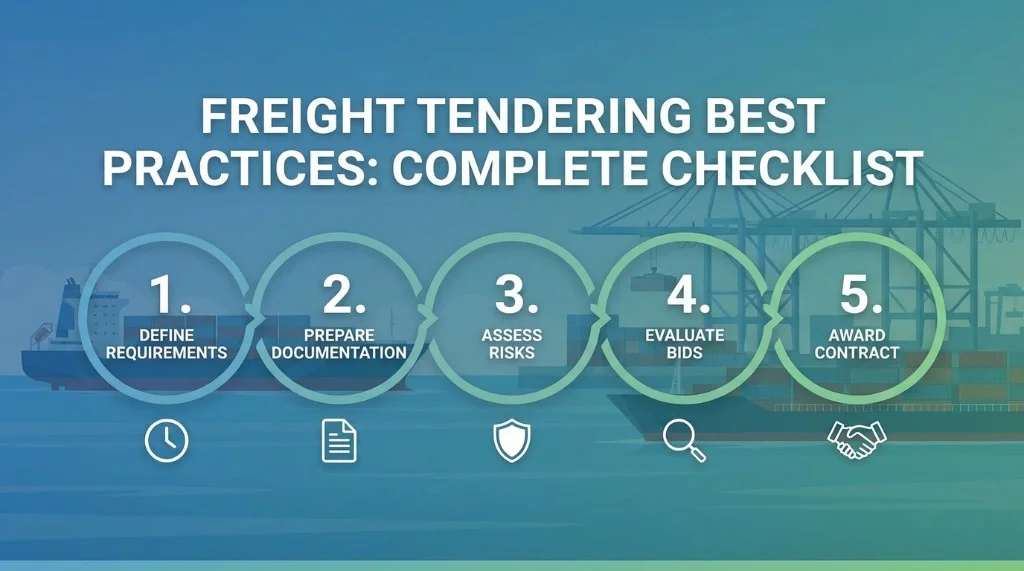
Here is a practical sequence for a mid-size bulk commodity trader building toward the ideal stack. This is not a theoretical framework. It is the sequence that consistently delivers the fastest ROI with the lowest implementation risk.
Phase 1: Stabilize the Core (Months 1–6)
GOAL: Get your existing systems working properly before adding new ones

Priority 1: CTRM health check
  -> Is your CTRM being fully used?
  -> Are there manual workarounds (spreadsheets) running alongside it?
  -> Is position data accurate and timely?
  -> If not: fix this before anything else

Priority 2: CTRM-to-ERP integration
  -> Is this manual today? Automate it.
  -> This is your highest-priority integration
  -> Payback: immediate, in reduced reconciliation labor and error rates

Priority 3: Central data warehouse
  -> Even a basic Snowflake setup with feeds from CTRM and ERP
  -> Build this before you build dashboards
  -> This is the foundation everything else sits on
Phase 2: Digitize Operations (Months 6–18)
GOAL: Eliminate email-based workflows and capture operational data

Priority 1: Digital freight procurement
  -> Move from email RFQ to structured tendering platform
  -> Highest single ROI project available to most mid-size traders
  -> Data generated becomes foundation for freight analytics and AI

Priority 2: Document automation
  -> Start with trade confirmations and invoices (highest volume, highest risk)
  -> ClearDox or CommodityAI
  -> Payback within 6 months through discrepancy detection alone

Priority 3: Vessel tracking integration
  -> Connect Kpler or MarineTraffic into operations system and CTRM
  -> Real-time cargo visibility is table stakes at this point
  -> Enables demurrage prediction in Phase 3
Phase 3: Build the Intelligence Layer (Months 18–36)
GOAL: Turn structured operational data into competitive intelligence

Priority 1: Demurrage analytics
  -> With structured freight data + vessel tracking, you now have the inputs
  -> Identify top 10 sources of demurrage cost
  -> Build predictive models for live cargo exposure

Priority 2: Market intelligence integration
  -> Connect Platts, Argus, Baltic Exchange into data warehouse
  -> Build dashboards that give traders real-time market context
  -> Layer freight rate benchmarking against your fixture history

Priority 3: AI document agents
  -> Once document management is generating clean structured data
  -> Layer AI agents for exception handling and workflow automation
  -> Agents flag issues; humans make decisions
Phase 4: Competitive Intelligence (36+ Months)
GOAL: Build proprietary capabilities that competitors cannot replicate

At this point you are building:
  -> Predictive freight rate models using your own fixture history + market data
  -> Counterparty performance scoring from years of structured operational data
  -> Pre-trade analytics that inform deal origination and pricing
  -> Supplier quality intelligence (StoneX model for agri traders)

This is mastodon-tier capability. Getting here requires Phases 1-3 to be solid.12. The Freight Procurement Problem — A Deeper Look
Freight procurement deserves its own section because it is simultaneously the highest-cost, highest-impact, and most digitally underserved area of bulk commodity trading operations. The gap between current practice and best practice is wider here than anywhere else in the technology stack. If you want to see closed-bid tendering on your routes, request a demo.
The Current State at Most Mid-Size Traders
Walk through the freight procurement process at a typical mid-size bulk trader and you will find something like this:
- Trader identifies a freight requirement (route, vessel size, laycan)
- Operations team sends RFQs via email to a list of 5–15 brokers and direct owners
- Responses arrive over the next 2–4 hours via email, phone, and WhatsApp in different formats
- Someone builds a spreadsheet to compare offers
- The spreadsheet is updated manually as new offers come in
- Award is made informally, communicated via email or phone
- Fixture confirmation arrives via email
- Fixture details are manually entered into the CTRM
At no point in this process is there a structured, auditable record of who was asked, what they offered, what the market rate was at the time of fixing, why the award was made, or how the carrier performed against the agreed terms.
The Consequences of This Model
No audit trail. If a trade goes wrong and demurrage becomes a dispute, you may not be able to prove the terms you agreed to. In regulated markets, the inability to demonstrate a fair and competitive procurement process is a compliance risk.
No market intelligence. You do not know whether the rate you fixed was above or below market because you have no structured historical data to compare against. You are relying entirely on broker relationships and intuition.
No counterparty performance data. You cannot identify which owners consistently deliver on time, which brokers consistently bring competitive rates, or which routes generate disproportionate demurrage — because nothing is captured in a structured, analyzable form.
No competitive benchmarking. You have no way to know whether your freight costs are in line with the market or whether you are systematically overpaying.
What Digital Tendering Changes
A structured digital tendering platform transforms freight procurement from an opaque, relationship-driven process into a transparent, data-driven one. The immediate benefits:
- Structured, comparable offers — all responses in the same format, instantly comparable
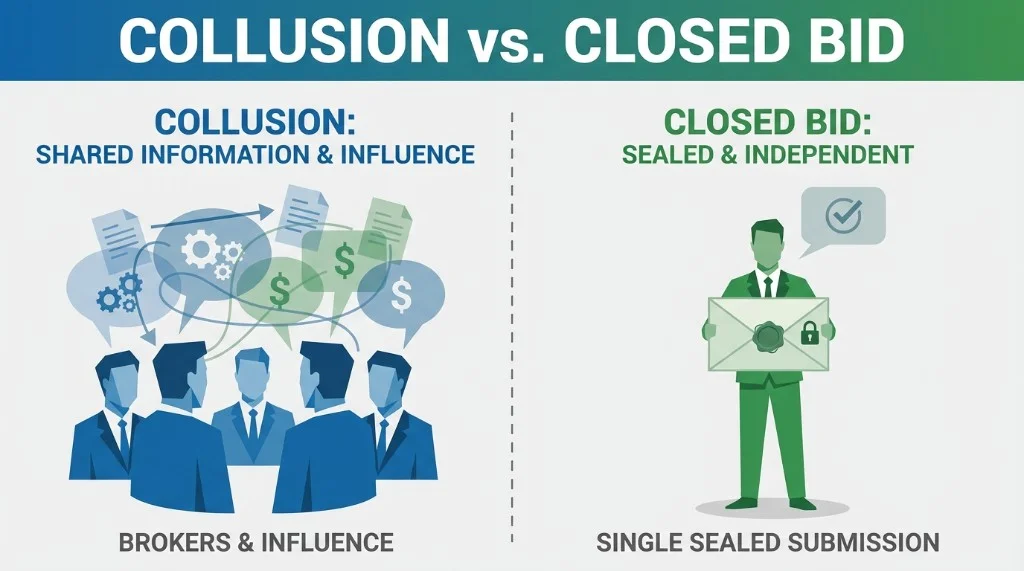
- Closed, auditable process — full record of who was invited, what they offered, when, and why the award was made
- Real-time market rate visibility — live comparison against market benchmarks
- Carrier performance tracking — on-time performance, demurrage rates, and cost per tonne tracked automatically over time
The compounding benefits over time are even more valuable:
- After 12 months: a proprietary dataset on your specific routes, cargo types, and seasonal patterns
- After 36 months: predictive rate intelligence that tells you when to fix and when to wait
- After 5 years: a competitive intelligence asset that no broker can sell you and no competitor can buy
The economics are straightforward. On $200M in annual freight spend, a 2% improvement in rates from more competitive, structured tendering is $4M in annual savings. The platform costs a fraction of that. The ROI is not measured in years. It is measured in months.
13. The Master Vendor Map
A consolidated reference of the key vendors by function, with fit recommendations by tier:
| Function | Mid-Size Recommendation | Mastodon Recommendation | Key Notes |
|---|---|---|---|
| CTRM | Eka One, IGNITE CTRM, Triple Point | Openlink (ION), Allegro (ION) | ION dominates the market but post-acquisition support is variable |
| ERP | Dynamics 365 + DycoTrade | SAP S/4HANA | Dynamics is faster and cheaper; SAP is right at mastodon scale |
| Freight Tendering | FreightTender (Bench Energy) | FreightTender (Bench Energy) | Only platform purpose-built for bulk commodity tendering |
| Vessel Tracking | MarineTraffic, Kpler | Kpler, Vortexa | Kpler is the industry standard; Vortexa stronger on energy |
| Market Data | Argus, Platts, Baltic Exchange | Argus, Platts, Baltic Exchange | Non-negotiable feeds; automate into CTRM and data warehouse |
| Document Automation | ClearDox, CommodityAI | ClearDox | ClearDox is the most domain-specific and proven |
| BI / Reporting | Power BI | Tableau, Power BI | Power BI for cost-effectiveness; Tableau for visualization complexity |
| Data Warehouse | Snowflake, Azure Synapse | Snowflake, Databricks | Snowflake is the default choice for most commodity traders |
| Integration Middleware | Azure Integration Services | MuleSoft, Informatica | Never build point-to-point; always use a central integration layer |
| Freight Intelligence | Baltic Exchange, Kpler | Kpler, Vortexa | Integrate into data warehouse, not just CTRM |
| Credit/Counterparty | CreditSafe, Dun & Bradstreet | Moody’s Analytics, S&P | Automate feeds into counterparty monitoring dashboard |
14. Frequently Asked Questions
What is the best CTRM for a mid-size bulk commodity trader?
For mid-size bulk commodity traders ($500M–$3B volume), Eka One, IGNITE CTRM, and Triple Point (ION CXL) are the strongest options in 2026. Eka One is cloud-native with an AI-ready data architecture and a strong real-time risk engine — the best choice if you are building toward an intelligence layer. IGNITE is fast to deploy and affordable with packaged pricing, making it the right choice if speed-to-value is the priority. Triple Point is strong for multi-commodity physical and financial trading, particularly agri and CPG. Enterprise-tier firms typically use Openlink or Allegro, both now part of ION Group.
How can bulk commodity traders reduce demurrage costs?
The most effective approach combines three capabilities: (1) AI document processing to detect demurrage discrepancies in real time — catching overcharges before they are paid rather than disputing them after; (2) vessel tracking integration (Kpler, MarineTraffic) to monitor laytime against pricing dates and flag exposure on live cargoes; and (3) structured freight tendering to identify counterparties with poor on-time performance and quantify the true cost of doing business with each partner. Freepoint Energy used AI document analysis to uncover systemic overcharges that had been invisible for years, leading to refunds and permanently reduced costs.
What is the difference between a CTRM and an ERP for commodity trading?
A CTRM manages the trading lifecycle — deal capture, position management, mark-to-market valuation, and risk exposure. An ERP handles financial accounting — general ledger, accounts payable and receivable, hedge accounting, and regulatory reporting. Commodity trading firms need both, tightly integrated. The most common and costly mistake is using a CTRM as a general ledger or trying to manage trading positions inside an ERP. Neither system is designed for the other’s job.
How should bulk commodity traders digitize freight procurement?
The highest-ROI step is replacing email-based RFQ processes with a structured digital tendering platform such as FreightTender by Bench Energy. This generates structured rate data, creates a full audit trail, enables carrier performance tracking, and provides real-time market rate benchmarking — none of which are possible with email workflows. On $200M in annual freight spend, a 2% rate improvement from structured competitive tendering equals $4M in annual savings. The platform cost is a fraction of that figure.
Where should AI be deployed first in a commodity trading operation?
The three highest-ROI AI applications for bulk commodity traders today are: (1) document processing and extraction — automating trade confirmations, bills of lading, and invoice reconciliation; (2) demurrage analytics — identifying patterns in demurrage charges by counterparty, terminal, and route; and (3) freight rate intelligence — benchmarking live quotes against historical fixture data and market indices. These three applications share a common prerequisite: clean, structured operational data. Autonomous trade execution and commodity price forecasting are not yet reliable enough for production deployment.
What is the recommended IT implementation roadmap for a bulk commodity trader?
A practical 36-month sequence: Phase 1 (months 1–6) — stabilize CTRM, automate CTRM-to-ERP integration, build a central data warehouse. Phase 2 (months 6–18) — digitize freight procurement, implement document automation, integrate vessel tracking. Phase 3 (months 18–36) — build demurrage analytics, connect market intelligence feeds, deploy AI document agents. Phase 4 (36+ months) — develop proprietary predictive models using accumulated operational data.
How much does a full technology stack cost for a mid-size bulk commodity trader?
Indicative ranges for a mid-size trader ($500M–$2B volume): CTRM implementation $500K–$3M (software + implementation); ERP (Dynamics 365) $300K–$1.5M; data warehouse and BI $100K–$400K annually; digital tendering platform $50K–$200K annually; document automation $100K–$400K annually; vessel tracking data $50K–$150K annually. Total first-year investment typically $1.5M–$6M, with ongoing SaaS costs of $500K–$1.5M annually. The ROI from freight savings and demurrage reduction alone typically recovers this investment within 12–24 months.
The Bottom Line
The bulk commodity trading firms that will dominate the next decade are not the ones with the most traders or the best market access. They are the ones that have turned their operational data into a proprietary competitive asset.
Every fixture you run through a structured tendering platform is a data point. Every document you process through an AI extraction tool is a data point. Every vessel arrival you track against a laytime calculation is a data point. Individually, these are operational improvements. Collectively, they become a decision-making engine that no competitor running on email and spreadsheets can replicate.
The path is not complicated, but it requires discipline and the right sequence:
- Stabilize your CTRM and ERP integration first — get the data plumbing right before you build on top of it
- Digitize freight procurement — it is the fastest and largest ROI available to most mid-size traders
- Automate document processing — eliminate manual reconciliation and start capturing operational data at scale
- Build a central data warehouse — before you build dashboards, before you deploy AI
- Layer AI on top of clean, structured data — not on top of chaos
The firms at the mastodon tier did not get there by buying one big expensive system. They got there by systematically eliminating every point where data left the digital world and entered a spreadsheet or an email. The data they accumulated over years of structured operations became their most valuable competitive asset — more valuable than their relationships, more durable than their market positions.
Start there. Start now.
bench.energy — Bench Energy’s FreightTender platform is purpose-built for the freight procurement layer of this stack — replacing email-based tendering with structured, auditable digital procurement for bulk commodity and chemical traders. It is the fastest path to the data foundation that everything else in this guide is built on.
Related on Bench Energy: Complete Guide to Freight & Commodity Trading (2026) · Freight Procurement Guide (6 chapters) · Closed-Bid Freight Tendering · Email Tendering Problems
Layer 3: digitize freight first
FreightTender is the operations-layer tendering platform this stack assumes — sealed bids, audit trail, and proprietary fixture data for BI and AI.
Related Articles
- AI & LLM Best Practices: Commodity Trading (2026)
- Freight Software for Shipping Companies (2026)
- Your DMCC Audit Is Due June 30. Your Freight Procurement Documentation Will Fail It.
- The Hormuz Crisis Exposed a Fatal Flaw in How Dubai Commodity Traders Manage Freight Procurement
- The Tariff Hangover Is Here. Email-Based Freight Procurement Made It Worse.