Capesize vs Panamax Freight Procurement: Different Vessels, Different Strategies
Key Takeaways
- Capesize: small fleet and broker pool — coordination risk is structural; sealed bid isolation is non-negotiable at fixture values of $1.5M–$4M.
- Open Capesize tenders 7–10 days before laycan; Panamax often 5–7 days, with cycle speed critical for demurrage prevention on busy routes.
- Reserve pricing: C5/C10 for Capesize; P3A/P2A for Panamax — add 5–8% for commission and complexity as a ceiling check.
- High-value Capesize fixtures draw more bank and compliance scrutiny; high-volume Panamax needs coherent audit trails at scale.
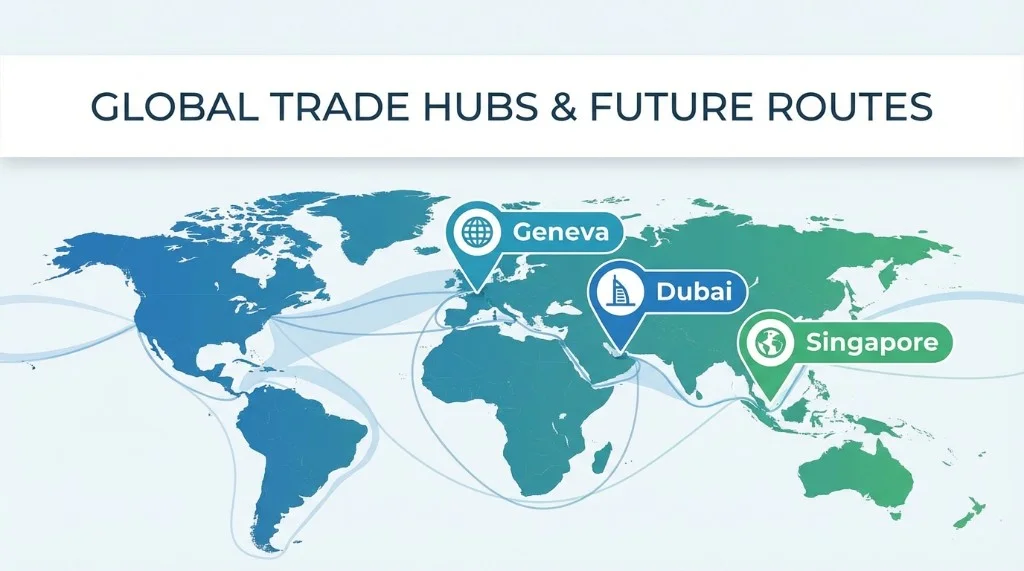
Capesize and Panamax vessels dominate dry bulk commodity freight — iron ore, coal, grain — but the procurement strategy for each is fundamentally different. The broker dynamics differ, the route concentration differs, the demurrage exposure differs, and the timing sensitivity differs.
Most freight procurement guides treat all dry bulk as interchangeable. The practical result is that desks running mixed Capesize and Panamax books apply the same tendering approach to both — and leave money on the table on one or both.
Capesize procurement: the market is smaller than you think
The active Capesize fleet numbers approximately 550–600 vessels globally. Of these, perhaps 120–150 are available in any given basin at any time. The broker community covering Capesize routes — Port Hedland to Qingdao, Tubarao to Rotterdam, Richards Bay to Qinhuangdao — is concentrated. In London, Singapore, and Shanghai, the active Capesize shipbroker community is 15–20 firms.
This concentration has a direct implication for procurement: in a market with 15–20 brokers covering a small vessel pool, information flows rapidly. When a Capesize tender is sent to six brokers via email, the probability that all six have spoken to at least one of the same shipowners before submitting is close to 100%. The coordination dynamic is not incidental — it is structural.
The procurement implication: Capesize tenders require strict bid isolation. The financial stakes justify it — a single Capesize fixture from Port Hedland to Qingdao at 170,000 mt has a freight value of $2.5–3.5M. A 15% coordination premium on that fixture is $375,000–$525,000. At 15–20 Capesize tenders per year, the annual exposure from inadequate bid isolation exceeds $5M.
Timing sensitivity on Capesize. Capesize vessels are not easy to find and fix quickly. A vessel suitable for a Richards Bay loading needs to be at or near the Atlantic basin, free of prior commitments in the laycan window, and technically compliant with the load port requirements. This vessel positioning logic means that Capesize tenders need to open 7–10 days before the laycan starts — not 3–5 days. Any desk opening Capesize tenders with less than a week of lead time is routinely accepting suboptimal vessel selection or paying a last-minute premium.
Laytime on Capesize is expensive. At $35,000–$55,000/day demurrage, a 4-day berth wait at Richards Bay — common in Q4 — costs $140,000–$220,000 on a single fixture. Capesize laytime negotiation is not a secondary consideration. NOR clause (WIBON vs on berthing), laytime exclusions (SHEX, weather working days), and whether the WWD clause extends to demurrage are worth negotiating explicitly on every Capesize fixture.
Panamax procurement: volume and speed
The Panamax fleet is larger — approximately 1,800–2,000 vessels — and the routes are more diverse. Coal from Newcastle to India, grain from US Gulf to Japan, iron ore from West Africa to China. The broker community is broader and the vessel availability is generally better.
This does not mean Panamax procurement is straightforward. It means the problems are different.
Volume creates administrative pressure. A desk running 80–100 Panamax tenders per year with email-based procurement spends 6–8 hours per tender on communication, consolidation, and documentation — 480–800 hours annually. At this volume, the administrative burden is the primary constraint on procurement quality. Brokers receive rushed tenders with imprecise specifications. Charter party terms get less scrutiny. Demurrage rates are accepted without comparison.
The coordination premium still exists. Panamax routes are more active but the broker community is still relationship-dense. Email tendering on Panamax routes with a panel of 6–8 brokers produces the same coordination dynamic as Capesize — just with more participants and slightly lower individual stakes. The aggregate impact at 80 tenders per year is similar.
Speed matters for demurrage prevention. On high-turnover Panamax routes like Indonesia–India or Newcastle–Japan, laycan windows are tight and vessel availability fluctuates. Desks that can run a Panamax tender in 8–18 hours have the operational flexibility to be selective on vessel quality and rate. Desks that need 3–5 days are frequently accepting what is available rather than what is optimal.
The procurement differences in practice
| Factor | Capesize | Panamax |
|---|---|---|
| Fleet size | ~550–600 vessels | ~1,800–2,000 vessels |
| Broker panel per route | 8–12 active firms | 12–20 active firms |
| Recommended tender lead time | 7–10 days before laycan | 5–7 days before laycan |
| Average fixture value | $1.5M–$4M | $500K–$2M |
| Demurrage rate | $35,000–$55,000/day | $20,000–$35,000/day |
| Laytime typical | 3–5 days | 3–5 days |
| Primary coordination risk | Very high — small fleet and broker pool | High — relationship-dense market |
| Key procurement metric | Bid spread width | Tender cycle time |
Reserve pricing: different indices for different vessels
Before opening any tender, a freight director needs a reserve price — the maximum rate above which the tender should be re-run. For Capesize and Panamax, the relevant Baltic Exchange indices are different:
Capesize: C5 route (West Australia → China, $/mt) and C10 route (South Africa → China, $/mt) are the most relevant benchmarks for coal and iron ore. The Baltic Capesize Index (BCI) provides a composite but route-specific rates are more useful for reserve pricing.
Panamax: P3A route (transpacific, $/day) and P2A route (transatlantic, $/day) are the standard benchmarks. For coal routes specifically, the P3A is the most frequently cited reference for Newcastle–Japan and similar Pacific fixtures.
The calculation: take the relevant Baltic Exchange route rate, add 5–8% for broker commission and cargo complexity, and use that as the ceiling. Any awarded rate more than 10% above this figure warrants investigation.
Compliance considerations differ by vessel size
For DMCC, MAS, and FINMA-regulated trading desks, Capesize fixtures receive more compliance scrutiny simply because the contract values are larger. A $3M freight fixture on a Capesize coal cargo is in the range where banks and regulators may request documentation of the procurement process as part of trade finance review.
Panamax fixtures at $500K–$2M are lower on the compliance radar individually but create audit trail problems at volume — 80 fixtures per year with email-based documentation produces a compliance file that is difficult to maintain and impossible to present coherently.
Both benefit from the same structural solution: an immutable, timestamped procurement record that can be produced for any fixture on request.
Related articles
- Beyond the Index: Using the BDI as a Strategic Trading Tool
- Freight Cost as a Percentage of Trading Margin
- Dry Bulk Freight Procurement Software: What Commodity Traders Actually Need
- Why Commodity Traders Are Replacing Email Freight Tendering
- Closed-Bid Freight Tendering: Why Sealed Offers Beat Email Tenders
- What Commodity Trade Finance Banks Now Require From Freight Procurement — And Why
- Freight procurement software (landing)
FreightTender manages Capesize and Panamax freight tenders with sealed bids and full audit trail. Request a demo →
Procure Capesize and Panamax with the same rigor
Sealed bids, route-level reserves, structured CP fields, and audit-ready logs — sized for your desk.
Build your trading vocabulary
Commodity & Freight Trader's Lexicon
200+ Anki flashcards covering coal, metals, and oil trading — charter party clauses, laytime mechanics, FOB/CIF structures, price indices, and market terminology used by professional traders.
Related Articles
- Your DMCC Audit Is Due June 30. Your Freight Procurement Documentation Will Fail It.
- The Hormuz Crisis Exposed a Fatal Flaw in How Dubai Commodity Traders Manage Freight Procurement
- The Tariff Hangover Is Here. Email-Based Freight Procurement Made It Worse.
- What Commodity Trade Finance Banks Now Require From Freight Procurement — And Why
- Freight Cost as a Percentage of Trading Margin: The Calculation That Changes Procurement Decisions