The Complete Guide to Freight Software for Shipping Companies in 2026: IMOS, Veson, and What Actually Works
Key Takeaways
- Market growth is real—but fit beats brand: match stack to fleet size and pain points.
- IMOS remains the enterprise default for large, multi-segment fleets; mid-market platforms trade depth for speed and TCO.
- Best-of-breed tendering, laytime, and fuel tools often beat generic modules for specific cost lines.
- Broker TMS and vessel ops software solve different problems—do not confuse transaction speed with voyage accounting.
- Compliance (EU ETS, CII, electronic reporting) is now a core selection filter, not an add-on.
The shipping industry is in the middle of a digital transformation that is impossible to ignore. According to SkyQuest Technology’s latest market analysis, the global shipping software market has grown from $13.7 billion in 2024 to $14.93 billion in 2025, and it is projected to nearly double to $29.75 billion by 2033. That is a compound annual growth rate of 9%—significantly faster than the shipping industry’s overall growth.
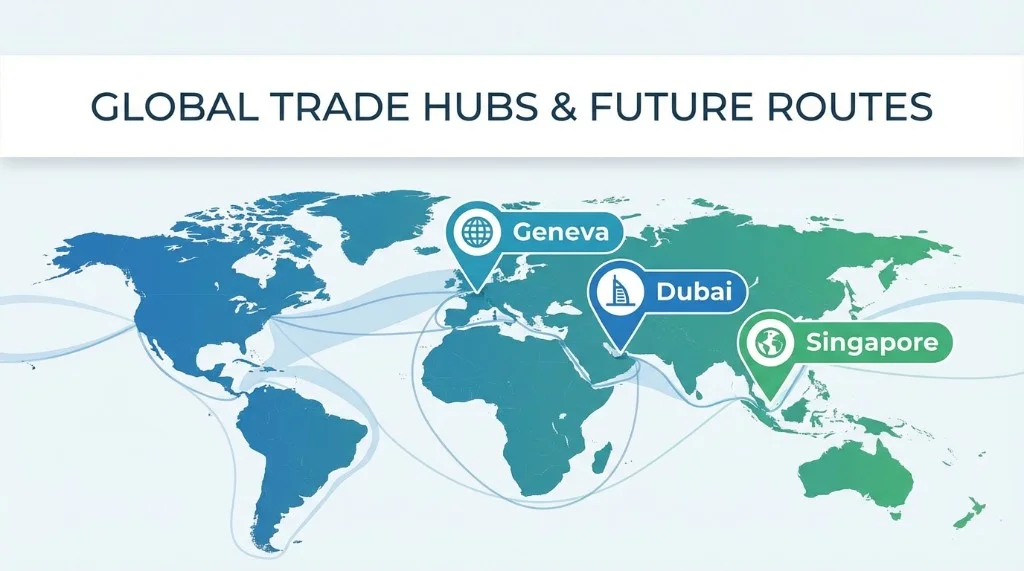
But here is what the numbers do not tell you: there is a massive gap between what software vendors promise and what actually works in the real world of freight operations. I have spent eighteen years in commodity trading technology—implementing systems from Aspect CTRM to SAP TRM across Dubai, Geneva, and Singapore operations. I have seen companies waste millions on the wrong platforms and watched others transform their operations with the right tools.
This is not another generic software comparison. This is a practitioner’s guide to what actually matters when you are choosing technology for freight operations in 2026. If you are also building the full trading-house IT picture, see our bulk commodity trader technology stack guide for CTRM, ERP, and operations layers.
Why This Matters Now
The pressure to digitize is not coming from technology vendors—it is coming from regulations, costs, and competition. The EU Emissions Trading System hit 100% coverage in 2026, adding roughly $1.5 million in annual carbon costs to a large container ship. The UK Maritime and Coastguard Agency now requires electronic submission of fuel consumption data. The International Maritime Organization’s Carbon Intensity Indicator is not optional anymore.
At the same time, the average demurrage incident costs $50,000, and industry data shows that 35% of vessels incur demurrage due to procurement delays. When your tender cycle takes four days instead of eighteen hours, that is not a theoretical problem—it is money leaving your company.
The companies winning right now are not necessarily the ones with the biggest IT budgets. They are the ones who have figured out which specific problems to solve with software and which tools actually solve them.
The IMOS Question Everyone Asks
Let’s start with the elephant in the room: Veson IMOS Platform. If you are in maritime operations and you have not heard of IMOS, you are either very new or working in a very small niche. IMOS has roughly 48% market share among enterprise maritime platforms. It manages 195,000 voyages annually, handling 4.6 billion metric tons of cargo and 807,000 port calls every year.
IMOS is what is called an “integrated maritime operations system”—it covers chartering, voyage estimation, operations, post-fixture accounting, trading and risk management, and analytics in a single database architecture. When a charterer enters a fixture, the operations team sees the voyage plan automatically, and accounting gets the accruals without manual intervention. When bunker prices change or demurrage starts accruing, the voyage P&L updates in real time.
For a large shipowner managing 50+ vessels across multiple segments—say, dry bulk and tankers—IMOS eliminates the nightmare of maintaining separate systems for commercial, operations, and finance. You get one version of the truth across your entire organization. The platform includes specialized industry solutions for dry bulk, tankers (oil, chemical, LNG), and containers, with segment-specific workflows built in.
The compliance features alone justify the investment for many companies. IMOS handles IMO Data Collection System requirements, EU MRV reporting, Carbon Intensity Indicator calculations, and direct integration with regulatory portals like the UK MCA’s electronic submission system. When you are operating vessels in multiple jurisdictions with different compliance requirements, having this automated rather than managed through spreadsheets is the difference between passing audits and facing penalties.
But here is what the sales presentations do not emphasize: IMOS costs $500,000 or more annually for an enterprise deployment. Implementation typically takes six to twelve months and requires a dedicated IT team to manage. Integration with your existing ERP system—whether that is SAP, Oracle, or something else—requires custom API work through Veson Global Services, which is a separate cost.
For a company with thirty vessels or more, a mature finance department, and a budget that can absorb half a million dollars a year in software costs, IMOS makes perfect sense. It is genuinely the industry standard for good reasons. But for a mid-size operator with fifteen vessels, or a commodity trading desk that charters rather than owns, IMOS is overkill. It is like buying an aircraft carrier when you need a speedboat.
When You Don’t Need IMOS
The mid-market has been underserved for years, which created an opportunity for platforms like Marlo. Marlo positions itself specifically for shipping companies with five to thirty vessels—the sweet spot where you have outgrown spreadsheets but do not need enterprise-grade complexity.
What makes Marlo different is not just the price point (typically $150–300 per vessel per month versus IMOS’s $500,000+ annual cost). It is the fact that they built banking and finance directly into the platform. Instead of syncing with an external ERP through custom APIs, Marlo includes FX transfers, corporate cards, loan tracking, and covenant monitoring as native features. They have native integrations with Xero and QuickBooks that work out of the box, which means you can be operational in one to two weeks instead of waiting months for custom API development.
The trade-off is straightforward: Marlo does not have a Trading & Risk module. If FFA trading, bunker swaps, and freight derivatives are core to your business, you need IMOS. But if you are a straightforward shipowner focused on voyage management and want integrated finance without building a custom tech stack, Marlo delivers faster time to value.
Signal Ocean takes a completely different approach. They have built an AI-powered platform focused on market intelligence and voyage planning, primarily for the tanker market. Their strength is real-time data analysis—they are using machine learning to analyze trade flows, vessel positioning, port congestion, and fixture news to give charterers and traders better market intelligence.
Signal Ocean does not try to be a complete back-office system. They do not compete with IMOS on voyage accounting or settlement. They compete on the quality of market intelligence and the speed of decision-making. For a trading team that needs to make fast chartering decisions based on current market conditions, Signal Ocean provides value that IMOS does not focus on. But you will still need something else to handle post-fixture accounting.
Q88 occupies yet another niche—they have built a reputation as the platform with the strongest post-fixture accounting capabilities. Their laytime and demurrage calculations are audit-ready by design, and they have deep integration with accounting systems. The trade-off is an interface that feels dated compared to modern cloud platforms and limited third-party integrations. Q88 works well for UK and European operators who prioritize accounting accuracy and are willing to accept a steeper learning curve.
The Specialized Tools That Actually Matter
Here is where conventional software wisdom breaks down. The industry acts like you need to choose one comprehensive platform and stick with it. In practice, the companies I have seen operate most efficiently use best-of-breed tools for specific pain points alongside their main platform.
Take freight tendering. If you are a commodity trader managing vessel fixtures, you are probably doing tenders through email right now. You send out the cargo details to fifteen brokers, they reply with offers, you try to track which broker offered what, and you are constantly wondering if brokers are coordinating with each other on rates. The average tender cycle takes three to five days, and you lose visibility and control throughout the process. For why this fails at scale—and how closed-bid freight tendering changes economics—see our dedicated explainer; for dry bulk-specific requirements versus trucking TMS, read dry bulk freight procurement software.
This is where FreightTender—the platform we built at Bench Energy—addresses a specific, expensive problem. The platform creates closed-bid tender environments where brokers cannot see each other’s offers. There is no information leakage, no ability for brokers to coordinate rates. Every offer is timestamped and immutable after submission. The entire process has a full audit trail that satisfies compliance requirements in jurisdictions like Dubai, Geneva, and Singapore.
The results are measurable. Companies using structured, closed-bid tendering see an average 18% reduction in freight rates compared to email-based processes. That is not marketing copy—that is what happens when you eliminate broker visibility and create true competitive pressure. The tender cycle drops from days to hours (typically 8–18 hours), which reduces demurrage risk significantly. We have managed over $1.2 billion in freight through the platform across fifteen trading companies.
One Geneva-based commodity trader was spending $340,000 annually on demurrage incidents. After switching from email tendering to structured closed-bid tenders, they cut their tender cycle from five days to eighteen hours and reduced demurrage by 60% in the first year. A Dubai iron ore exporter prevented a $180,000 demurrage incident by being able to award freight two days faster than their previous email-based process allowed.
The platform does not try to be IMOS. It solves one specific problem—freight procurement—exceptionally well. You can use it alongside IMOS, alongside Marlo, or as a standalone tool if you are chartering vessels rather than operating them.
Circe is another example of a specialist tool that matters. They focus exclusively on laytime calculations and demurrage tracking. Their software automates laytime calculations based on charter party terms, tracks demurrage and despatch in real time, and maintains an audit trail for disputes. Industry data shows that proper laytime management prevents 30–50% of demurrage incidents. For companies that struggle with demurrage, adding Circe to their tech stack—even if they are already using IMOS—can pay for itself within months.
Quadrum Voyager specializes in fuel optimization and voyage performance monitoring. Their platform does real-time analysis of speed versus consumption, weather routing with predictive analytics, and trim and ballast optimization for fuel savings. A mid-size tanker operator with fifteen vessels saved €2.3 million annually through fuel optimization using Quadrum. That is real money that goes straight to the bottom line.
The point is this: you do not have to solve every problem with one platform. Sometimes the right answer is a core platform (IMOS, Marlo, or something else) plus specialized tools for specific high-cost problems.
What Freight Brokers Actually Need
Freight brokers work in a completely different world than shipowners, and they need different tools. A broker’s job is matching loads with carriers, managing relationships, protecting margins, and moving fast. Their software needs reflect that reality.
The best broker TMS platforms prioritize speed of execution. They need to post a load, get carrier responses, and lock in a rate within minutes, not hours. They need automated tendering workflows that can blast a load to fifty qualified carriers simultaneously. They need carrier management tools that track insurance compliance, on-time performance, and fraud indicators.
Descartes Aljex has dominated the enterprise broker market for years because they have built exactly this. Their platform includes deep EDI and API connectivity, denied-party screening, trade intelligence, and compliance automation. For established 3PLs handling high volumes, Aljex provides the operational backbone they need. The cost is higher and pricing is not transparent (you need a custom quote), but the integration ecosystem and reliability justify it for large operations.
ARK TMS has gained traction by offering transparent pricing and faster deployment. They include e-signatures, automated rate confirmations, BOL generation, and invoice automation out of the box. Their pricing model is straightforward (monthly subscription, no hidden fees), and implementation typically takes weeks rather than months. For brokerages in growth mode that do not want to navigate a complex sales process, ARK delivers faster time to value.
ShipperGuide, which is part of Loadsmart’s ecosystem, represents where broker TMS is heading. They have built an AI-native platform with intent-driven workflows. Their system uses AI to recommend carriers based on historical performance, predict pricing based on market data, and automate bulk execution of similar loads. The pricing is usage-based rather than subscription, which aligns cost with actual transaction volume.
The key difference between these platforms and something like IMOS is focus. IMOS is built for the complexity of vessel operations—managing assets worth tens of millions of dollars over multi-week voyages. Broker TMS is built for transaction speed—matching hundreds or thousands of loads per month with fast carrier sourcing and thin margins. The workflows, data models, and user interfaces are fundamentally different.
The Cloud and AI Reality Check
Every software vendor talks about AI and cloud computing now, so it is worth separating hype from reality. Cloud adoption in maritime software hit 57.89% of deployments in 2025, with hybrid models (cloud-based management with edge computing on vessels) growing at 10.49% annually. This is not theoretical anymore—it is how modern maritime software is deployed.
The practical benefit of cloud deployment is obvious once you have dealt with on-premise systems. When you are running software on servers in your office, you need IT staff to manage updates, handle backups, and deal with failures. When the system goes down, your operations stop. Cloud platforms handle this infrastructure automatically. You get updates without service interruptions, automatic backups, and the ability to access the system from anywhere.
The more interesting development is edge computing on vessels. Maersk deployed shipboard wireless networks on 450 vessels in 2025, which lets shore teams access engine data for predictive diagnostics in real time. Nokia edge computers on board process video streams from cargo handling operations and detect anomalies in seconds. This was not possible with the narrow-bandwidth satellite connections that dominated maritime communications until recently.
Connectivity has genuinely transformed what is possible. Telenor Maritime reported 60% growth in connectivity subscriptions in 2025. With private 5G/LTE networks on board and services like Starlink Maritime providing 4G-class bandwidth, vessels are not disconnected from shore operations anymore. This unlocks cloud-based applications that simply would not work over traditional satellite connections.
On the AI side, the real progress is in predictive maintenance and route optimization. Machine learning systems can analyze sensor data from engines and predict failures before they happen, which allows operators to schedule maintenance proactively rather than dealing with breakdowns. AI-powered route optimization considers weather patterns, port congestion, fuel prices, and schedule constraints simultaneously to recommend optimal routing.
Signal Ocean uses natural language processing to analyze fixture news and market reports, extracting insights about market sentiment and demand trends. ShipperGuide uses machine learning to match loads with carriers based on historical performance data and recommend pricing based on market conditions. These are not theoretical applications—they are deployed in production and delivering measurable value.
The hype comes in when vendors claim AI will solve everything. AI is a tool, not magic. It requires clean data, proper training, and human oversight. The companies seeing real value from AI are using it for specific, well-defined problems where they have enough data to train models properly.
The Compliance Driver You Can’t Ignore
The EU Emissions Trading System hitting 100% coverage in 2026 has forced every operator with vessels trading to Europe to implement proper carbon accounting. The numbers matter: a large container ship faces roughly $1.5 million in annual carbon costs. That is not a theoretical compliance burden—it is a line item in your P&L that directly affects profitability.
Voyage planning software that includes CII optimization can reduce carbon intensity through better route selection, speed optimization, and port choice. The software calculates whether it is more profitable to steam slower and save fuel (reducing both cost and emissions) or maintain schedule at higher speeds and accept higher carbon costs. These are not simple calculations—they require integrating bunker prices, EU ETS allowance costs, cargo value, charter party terms, and market conditions.
IMOS, Quadrum Voyager, and DNV ShipManager all include carbon accounting and CII optimization as core features now. They automate fuel consumption tracking for IMO DCS compliance, calculate EU ETS allowance requirements, and integrate directly with regulatory portals for electronic submission. The UK MCA’s requirement for electronic fuel consumption submissions starting in 2025 made this automation necessary rather than optional.
The regional variation in compliance requirements is why Europe represents 28.74% of the maritime analytics market despite having less shipping activity than Asia-Pacific. European operators need software that handles complex, overlapping regulatory requirements across multiple jurisdictions. Scandinavian carriers are now budgeting analytics and compliance software as recurring operating expenses rather than discretionary IT spending, which shows how fundamental this capability has become.
If you are operating vessels in regulated markets, compliance features cannot be an afterthought in your software selection. They need to be core functionality that is maintained and updated as regulations change.
How to Actually Choose
The mistake most companies make is starting with features. They create spreadsheets comparing which platforms have which capabilities, as if more features equals better value. This leads to buying comprehensive platforms you do not need or missing specialized tools that would solve your actual problems.
Start with pain points instead. Where are you actually losing money right now? If demurrage incidents cost you $400,000 last year, that is your pain point. If you are spending twenty hours a week manually entering data between systems, that is your pain point. If compliance audits consistently find gaps in your documentation, that is your pain point.
Quantify the pain in dollars and hours. Then look for software that specifically addresses those costs. A platform that saves you ten hours of admin work per week is worth roughly $26,000 annually at a $50 hourly rate. A tool that prevents three demurrage incidents per year is worth $150,000 if average incidents cost $50,000. This gives you a clear ROI target for any software investment.
Consider your scale honestly. If you are operating five vessels, enterprise software built for 100+ vessel fleets is going to be expensive and overcomplicated for your needs. Cloud platforms built for the mid-market will give you faster deployment and better ROI. If you are operating fifty vessels with complex multi-segment operations, you probably do need an enterprise platform—but make sure it actually handles your specific segments well.
Check integrations before you commit. The best software in the world is useless if it does not connect to your existing systems. If you are running SAP for accounting, make sure the maritime software you are considering has proven SAP integration. If you are using Xero or QuickBooks, native integration saves months compared to custom API development. For freight brokers, integration with load boards like DAT and Truckstop is non-negotiable.
Calculate three-year total cost of ownership, not just year-one licensing. Factor in implementation costs, training, custom development for integrations, and ongoing support. An enterprise platform that costs $500,000 in licensing might have a three-year TCO of $1.5–2 million once you include implementation and integration work. A mid-market SaaS platform with $100,000 in annual costs might have a three-year TCO of $300,000 if it deploys faster and requires less custom work.
Run a pilot before committing to fleet-wide deployment. Take two or three vessels or routes, implement the software, and measure actual results over three to six months. Track time savings, cost reductions, error rates, and user satisfaction. If you are not hitting your target ROI in the pilot, you will not hit it fleet-wide. If the software delivers in the pilot, you have confidence to scale.
What’s Actually Working in 2026
The market has consolidated around a few clear patterns. For large operators with 30+ vessels, IMOS Platform remains the industry standard because nothing else offers comparable scope and integration. The cost and complexity are justified by the scale of operations.
For mid-market operators with 5–30 vessels, platforms like Marlo deliver better ROI by being purpose-built for that segment. The built-in finance features and native accounting integrations eliminate the need for complex ERP integration projects.
For specialized problems—freight tendering, laytime calculation, fuel optimization—dedicated tools consistently outperform generic features in comprehensive platforms. FreightTender’s closed-bid tendering delivers measurable rate reductions that email processes cannot match. Circe’s laytime focus prevents demurrage incidents that general-purpose accounting tools miss. Quadrum’s optimization algorithms find fuel savings that manual planning overlooks.
For freight brokers, the TMS market has split between enterprise platforms like Aljex (comprehensive, expensive, proven) and agile platforms like ARK TMS (transparent pricing, faster deployment, good enough for most brokers). AI-native platforms like ShipperGuide represent where the market is heading, but adoption is still early.
The compliance driver is real. Companies operating in Europe cannot avoid implementing proper carbon accounting and CII optimization. The software that handles this well—IMOS, Quadrum, DNV ShipManager—has a structural advantage in regulated markets.
The winners in 2026 are not the companies spending the most on software. They are the companies that have figured out which specific problems cost them the most money and found tools that actually solve those problems. Sometimes that is a comprehensive platform. Sometimes it is a specialized tool. Often it is a combination.
The key is being honest about your actual needs, your actual scale, and your actual budget—then finding software that matches those realities rather than trying to force your operations into whatever the biggest vendor is selling.
About FreightTender
FreightTender is a closed-bid freight tender platform built specifically for commodity and chemical traders. Unlike email-based tendering, FreightTender creates sealed tender environments where brokers cannot see each other’s offers, eliminating rate manipulation and creating true competitive pressure.
Companies using FreightTender typically see:
- ~18% average freight rate reduction
- 60% reduction in procurement cycle time (days to hours)
- 30–50% fewer demurrage incidents
- Full compliance audit trail for DMCC, FINMA, and MAS jurisdictions
Request a 15-minute demo · Contact: pavel@bench.energy · Telegram: @Bench_energy
Related: Freight procurement guide · Tendering best practices · Demurrage and procurement speed
Add sealed tendering alongside IMOS or Marlo
FreightTender closes broker visibility gaps, cuts tender cycles to hours, and builds the audit trail commodity and chartering desks need next to voyage systems.
Build your trading vocabulary
Commodity & Freight Trader's Lexicon
200+ Anki flashcards covering coal, metals, and oil trading — charter party clauses, laytime mechanics, FOB/CIF structures, price indices, and market terminology used by professional traders.
Related Articles
- AI & LLM Best Practices: Commodity Trading (2026)
- Bulk Commodity Trader Tech Stack: The Complete 2026 Guide
- Your DMCC Audit Is Due June 30. Your Freight Procurement Documentation Will Fail It.
- The Hormuz Crisis Exposed a Fatal Flaw in How Dubai Commodity Traders Manage Freight Procurement
- The Tariff Hangover Is Here. Email-Based Freight Procurement Made It Worse.